CWC VOICES // 'A' is for achievable
2025 was a memorable school year for Christel House SA for many reasons

The UCT GSB Case Writing Centre recently launched its latest in the Doing Business in Africa case on Christel House South Africa, inviting readers to examine how a high impact education model sustains excellence while navigating funding constraints, governance complexity, and the realities of operating in South Africa. Next we highlight Christel House SA’s most recent results and milestones which demonstrate how the strategic questions explored in the case are translating into measurable progress on the ground.
Christel House South Africa’s 2025 performance reflects the strength of its long term, holistic approach. Serving learners from Grade RR through Matric and supporting graduates for up to five years post school, the organisation integrates rigorous academics with healthcare, nutrition, psychosocial support, family engagement, and career guidance. This model continues to produce durable outcomes. Learner retention remains strong, alumni progression into tertiary study and employment is sustained, and the organisation is preparing to expand access through a second high school stream and plans for a new Grade RR to 12 campus in the Western Cape, subject to securing land.
Academic results remain a cornerstone of impact. The Class of 2025 achieved a 96 percent Matric pass rate, with 70 percent earning Bachelor passes, outperforming provincial averages. For learners growing up on the poverty line, Matric represents a pivotal inflection point for families and communities alike. Targeted initiatives such as the Matric Intensive Programme, which converts the school hall into a structured study and residential space during exams, contributed to 26 subject distinctions across a cohort of 56 students. These outcomes reinforce Christel House’s commitment not only to access, but to excellence.
Beyond the classroom, 2025 has also been a year of leadership recognition. CEO Adri Marais was named a winner of the Mail and Guardian Power of Women Awards in the Education category, a national acknowledgement of women driving meaningful transformation in South Africa. Under her stewardship, Christel House has strengthened programmes such as the Simunye Project, which connects learners across socio economic divides, and the Youth Bridge Initiative, which supports unemployed youth into meaningful work. Her recognition underscores the importance of aligned leadership in sustaining mission driven growth.
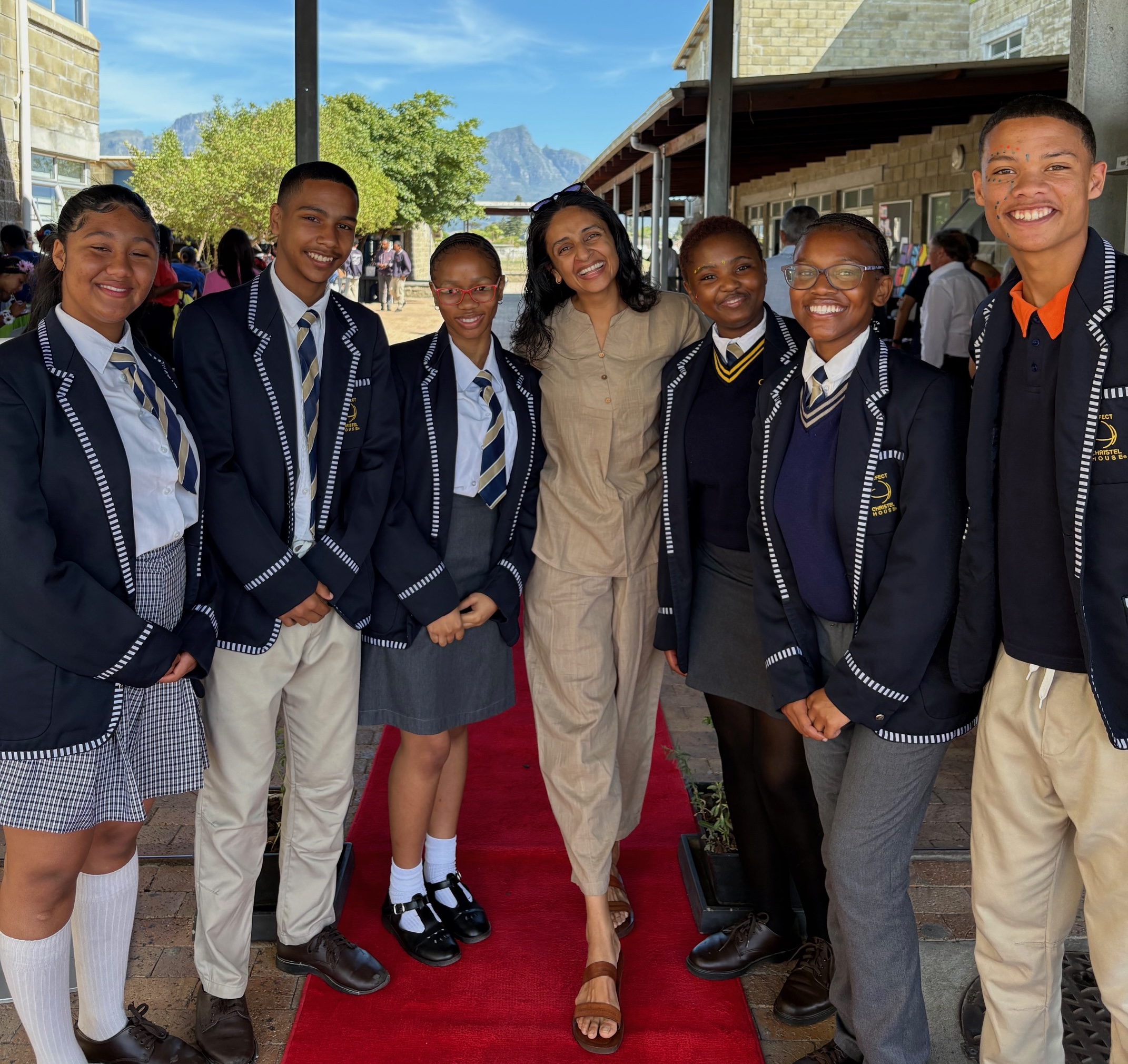
The year’s achievements were brought to life at Christel House’s Special Assembly, where one of our own case researchers, Shivani Ghai, got to witness the magic firsthand. Students, staff, partners, and supporters gathered to celebrate progress and community. Through performances, reflections, and shared milestones, the assembly served as a reminder that education at Christel House is about more than results. It is about confidence, dignity, and long-term opportunity. As the CWC case illustrates, the organisation’s challenge is not whether the model works, but how to scale it responsibly. The evidence from 2025 suggests that disciplined governance, value aligned partnerships, and unwavering focus on learners continue to move that ambition forward.
To learn more about this organisation and it’s challenges of impact and scale, head on over to our DBIA collection of cases here.


