TOP 3 // Education Innovation
The best cases on education innovation in emerging markets from the Case Writing Centre

Last week, we posted a bonus podcast to our latest DBIA case on Christel House South Africa, an independent school, discussing how innovative models like theirs can transform education at every level. Theirs is a vital example at a time when education systems everywhere are facing challenges. Around the world, changes in the structure of our economies – led heavily by shifts in technology and global demand – have raised questions about how we should upgrade our education systems to meet the unprecedented needs of the 21st Century. In emerging markets, these questions are particularly pressing given a wicked combination of large youth population and sluggish industry development. By 2050, it is estimated that Africa will have 40% of the world’s population of children and adolescents, a tremendous opportunity for driving growth, but also a threat in the face of sky-high rates youth unemployment rates.
In resource-constrained emerging markets, policymakers, employers, and educators are looking for ways to balance the equation at every level of the education system, and asking some common questions. Can technology be a lever for reaching more students at lower costs? How do we use schools to meet the social needs of students? How do we ensure students are workplace-ready by graduation? How important is higher education, and which institutions are most relevant for the employees of the future?
As innovative civil society and the private sector actors are increasingly leading the way in revamping education in emerging markets, there is much to be learned from the strategies they employ to disrupt systems and overcome barriers. Christel House represents one such strategy. Here are three more top cases from our main collection that offer insights for answering the big questions in education with innovation:
By Professor Mikael Samuelsson, Terrence Elliott, Sarah Boyd
This strategy case follows a renowned South African family business, The Answer Series (TAS), as they enter the era of edtech and confront the possibility of digital disruption in the supplemental education materials space. Founded in 1975, TAS produces printed study guides that have become a mainstay for secondary students across the country, especially as they prepare for national exams. When the founders’ son George Eadie takes over as CEO in 2019, the state of public education across the country is becoming more dire, creating new challenges for the business, as well as new opportunities. The government is increasingly interested in tech-based approaches to reach the most vulnerable students, and as more local start-ups emerge to answer the call (and bump TAS for public contracts), George feels the pressure for TAS to develop its own digital offering. But not everyone in the family agrees. Must TAS re-think its product offering to remain competitive in this changing market? How can they incorporate technology without compromising the product quality that made them an industry leader? How can they adjust their business model to reach students who need their products the most?
By Cynthia Rayner, Camilla Thorogood, Dr François Bonnici
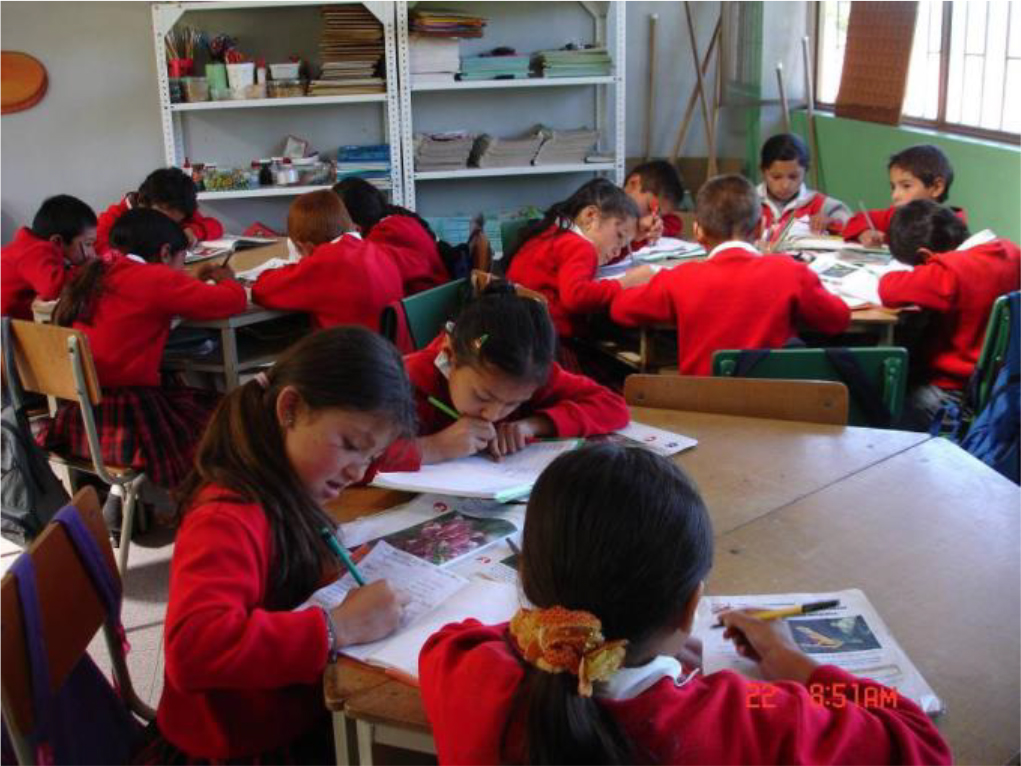
One of our rare cases from outside the continent, Fundación Escuela Nueva (FEN) follows a public servant turned social entrepreneur, Vicky Colbert, as she develops a new educational model for rural government schools in Colombia. Starting in the 1970s, Vicky introduces the Escuela Nueva model: a child-centred pedagogy in which students of different ages, supported by teachers, work in small groups to guide themselves with the use of instructional materials. In these classrooms, students manage all activities, and family and communities members are closely involved in the overall education process. Although the model was introduced to 20,000 schools across the country, political upheaval in the late 1980s disrupted the wider rollout. Colbert established FEN to continue their work of transforming primary education in resource-constrained schools facing systemic instability, which it has done in more than 20 countries in Latin America and beyond. The case highlights the value of social innovation in emerging market education systems, and demonstrates how social entrepreneurs can partner with the public sector to develop and sustain solutions.
By Professor Mignon Reyneke, Thabile Bhengu, Sarah Boyd
The Student Hub case takes us into the world of edtech market strategy, following a start-up that seeks to transform technical vocational education and training (TVET) in South Africa. Though a critical part of the country’s tertiary education system, TVET institutions are often overlooked in the discussion of education transformation. In the 2010s, a series of challenges in the sub-sector are holding back progress: certification backlogs, outdated curricula, limited resources, and insufficient digital infrastructure. In 2021, founder Hertzy Kabeya has ambitions of addressing some of these problems for TVET colleges through a suite of e-learning and software-as-a-service (SaaS) solutions tailored to the needs of TVETs. The pandemic has boosted demand for digital solutions, and The Student Hub is ready with a range of products, piloted at multiple colleges around the country. But with an early-stage investment of R45 million (US$2.73 million), Hertzy and his team must decide which revenue streams to focus on for growing the company. Should they focus on course sales, marketed directly to students? Should they partner with government, which administers most TVET colleges, to push their white-label learning management system into more colleges? Should they market the platform to private TVET colleges?
You can find these and more cases on education innovation from the GSB Case Writing Centre at Harvard Business Impact and The Case Centre.