
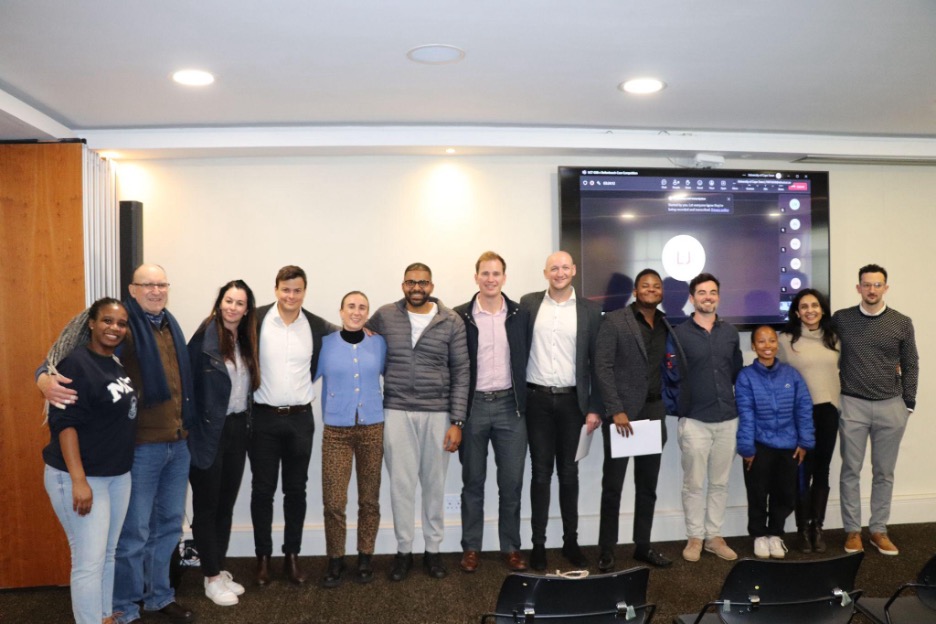
On a brisk Saturday morning in July, while most of Cape Town was easing into the weekend, a group of MBA students from UCT Graduate School of Business (GSB) and Stellenbosch Business School (SBS) were deep in the throes of strategic problem-solving. The reason? The inaugural inter-varsity case competition between the GSB and SBS consulting clubs – an intense, high-stakes face-off that capped off the GSB’s Annual Consulting Conference the night before.
That Friday night, the GSB’s halls buzzed with conversation as consulting industry leaders from BCG, Deloitte, FutureWorld, Pegasys and other top firms rubbed shoulders with students and faculty. “It was a consulting star-studded evening,” one organiser quipped. But there was no time to bask in the afterglow. By 8am the next morning, it was back to business.
The Case: ASICS at a Crossroads
The competition case, "ASICS – Can a Record Past Performance Guarantee Future Success?", challenged teams to advise the iconic Japanese sportswear brand on how to sustain its global momentum while adapting to the tastes and values of the Gen Z consumer. Originally written by the IBS Center for Management Research in India, and winner of the John Molson School of Business Case Writing Competition, the case was rich with global relevance and strategic tension.
Teams had to tackle everything from brand repositioning and fashion collabs, to counterfeit risk management, to digital transformation and sustainable innovation. And they had just three hours to prepare.
Teamwork under pressure
The winning team – Kevin Mwiti, Nic Symmonds, Josh Verheul, and Patrik Schiller from UCT GSB – had never worked together prior to the competition. Yet under pressure, they quickly found a rhythm.
“It was an intense but energising experience,” said Nic. “We had to figure each other out fast, strengths, gaps, communication styles. On the day, we challenged each other, listened closely, and executed well. It was such a fulfilling process. Something I’d do again in a heartbeat.”
Their strategy impressed the panel of GSB alumni and industry judges, which included consultants from BCG and FutureWorld. The esteemed panel brought both rigour and real-world relevance to the feedback process.
Collaboration and competition
Though the stakes were high, the atmosphere was anything but cutthroat. In fact, the collaboration between UCT and SBS’s Consulting Clubs was one of the highlights of the event.
UCT’s Chad Otto, one of the event organisers and participants, reflected: “Collaborating with MBA students from our ‘rival’ school was unexpectedly fun and energising. The coaching sessions leading up to the day were so insightful, two hours never felt long enough. And pitching in front of real-world consultants? Challenging, yes. But exhilarating too.”
From the SBS side, the competition served as a powerful learning accelerator. For Rodney Mushongachiware, it was a breakthrough moment: “This was the first time I got to really apply all the tools I’ve learned during my MBA. It brought everything together under real pressure, and I’ve genuinely changed how I now approach challenges.”
Letitia Jentel added that the interactive, fast-paced format pushed her to think critically and adapt on the fly, while Koketso Kekana recalled the late-night prep sessions, “juggling work, deadlines, and Wi-Fi battles”, as part of what made the experience so memorable. And for Cavan Holleran, the calibre of competition was clear: “Our competitors did an extraordinary job. I actually found myself nervous, which is rare for me!”
Why this matters
The inter-varsity case competition is more than just an academic exercise, it’s a vivid embodiment of the UCT GSB Case Writing Centre’s mission: to equip students with the tools and environments to think strategically, act collaboratively, and learn by doing. With students taking the lead on organising, partnering, coaching, and competing, and with real cases and real consultants in the mix, this was learning at its most applied.
The first inter-varsity consulting case competition was a resounding success. With the aspiration to have more business schools join next year, and more students craving meaningful, competitive learning experiences, it’s clear: this is just the beginning.
Watch this space.
by Shivani Ghai


