FEATURE // Banking on change
Old Mutual’s entry into the banking sector in South Africa signals a shake-up for the industry. But, is there enough room for one more?

South Africa’s banking industry has additional movement. In a move that's further transformed the industry, Old Mutual, South Africa’s largest insurer by assets, has expanded its offerings by officially entering the banking industry at the end of last year. Backed by a 175-year legacy and strong financial muscle, Old Mutual has made its intentions clear: to challenge the status quo and capture a significant share of the highly lucrative and yet fiercely competitive market. Over a period of two years, from 2022 to 2024, Old Mutual invested a combined R2.8 billion towards the cost of building the new bank, including R1.75 billion to build the bank infrastructure and functionality, and an additional R800 million for further testing and marketing materials. But Old Mutual understands it has entered a highly contested territory. With established players competing to retain their market share and new fintechs like TymeBank and Discovery Bank already making waves, the stakes are high. What does this bold entry mean for the industry, as well as for the consumers?
Let’s take a look.
Following years of speculation, the time has finally come for a new sector to expand into the local banking industry. Despite its long and illustrious history in which the company has offered a range of financial products, launching a licenced, full-scale bank is a different strategic move with a different set of rules. As mentioned in the Old Mutual’s Integrated Report, the new entity will initially offer transactional accounts, savings, and lending, with further expansion into business banking on the horizon.
According to the company, the move reflects both a strategic response to shifting market dynamics and a plan to deepen customer relationships. Commenting on the benefits of expanding their offering into banking, Old Mutual CEO Iain Williamson, highlighted the transactional capability of the bank as one that will improve the company’s ability to interact and engage with their customers.
The South African banking industry has long been dominated by established banks with decades of experience and tradition. However then Capitec bank disrupted the industry in 2001 and quickly gained market share by focusing on the underserved and unbanked clients. Capitec’s business model offered its customers simple, affordable, and accessible banking services. Today, Capitec is the biggest bank in South Africa by customer numbers, with 24.1 million customers. The arrival of Old Mutual Bank will further disrupt the industry and intensify competition. This is usually good for customers as competition often reduces the fees and improves products and the quality of services. This investment by Old Mutual into the local banking industry signals confidence in the country’s regulatory environment and long-term economic prospects, even amid persistent macroeconomic challenges.
South Africa has one of the most advanced and sophisticated banking systems on the African continent. It is well-regulated, highly capitalised, and technologically innovative. In 2024, the industry navigated a challenging economic landscape characterised by high inflation, interest rate increases, loadshedding challenges, and yet it demonstrated tremendous resilience. Major South African banks reported a combined headline earnings growth of 5.9%, adding up to R119 billion, with a return on equity (ROE) of 17.5% and a credit loss ratio improving to 89 basis points from 102 in the previous year. A notable trend is that during 2024, digital transformation continued to grow rapidly, with approximately 21 million digitally active clients by the end of the year, thus reflecting a major shift towards online banking platforms.
Notwithstanding the above, the industry carries some paradoxes. On one hand, South Africa’s big five banks, namely, First National Bank (FNB), Standard Bank, Nedbank, Absa, and Capitec, all serve millions of South Africa consumers and are globally respected for their financial stability. On the other hand, South Africa is still grappling with issues of financial exclusion. Despite the progress made and improvements in digital access, millions of South Africans remain unbanked or underbanked, particularly in rural and informal sectors. According to a PayFast report, an estimated 19 million South African citizens were unbanked or underbanked, with more than a million small and medium-sized enterprises that were still trading using cash only. There are still unmet needs in the unbanked or underbanked markets, as well as in the informal sectors of South Africa’s economy.
Another distinctive feature is that South Africa’s firmly established reliance on mobile phones, even in low-income households. The country’s high mobile penetration makes it ripe for digital-first banking models. This is one of the major reasons that digital-only "neobanks", like TymeBank, have flourished in South Africa in recent years.
Old Mutual Bank now not only competes with established banks but will also face newer players that have already disrupted the industry.
TymeBank
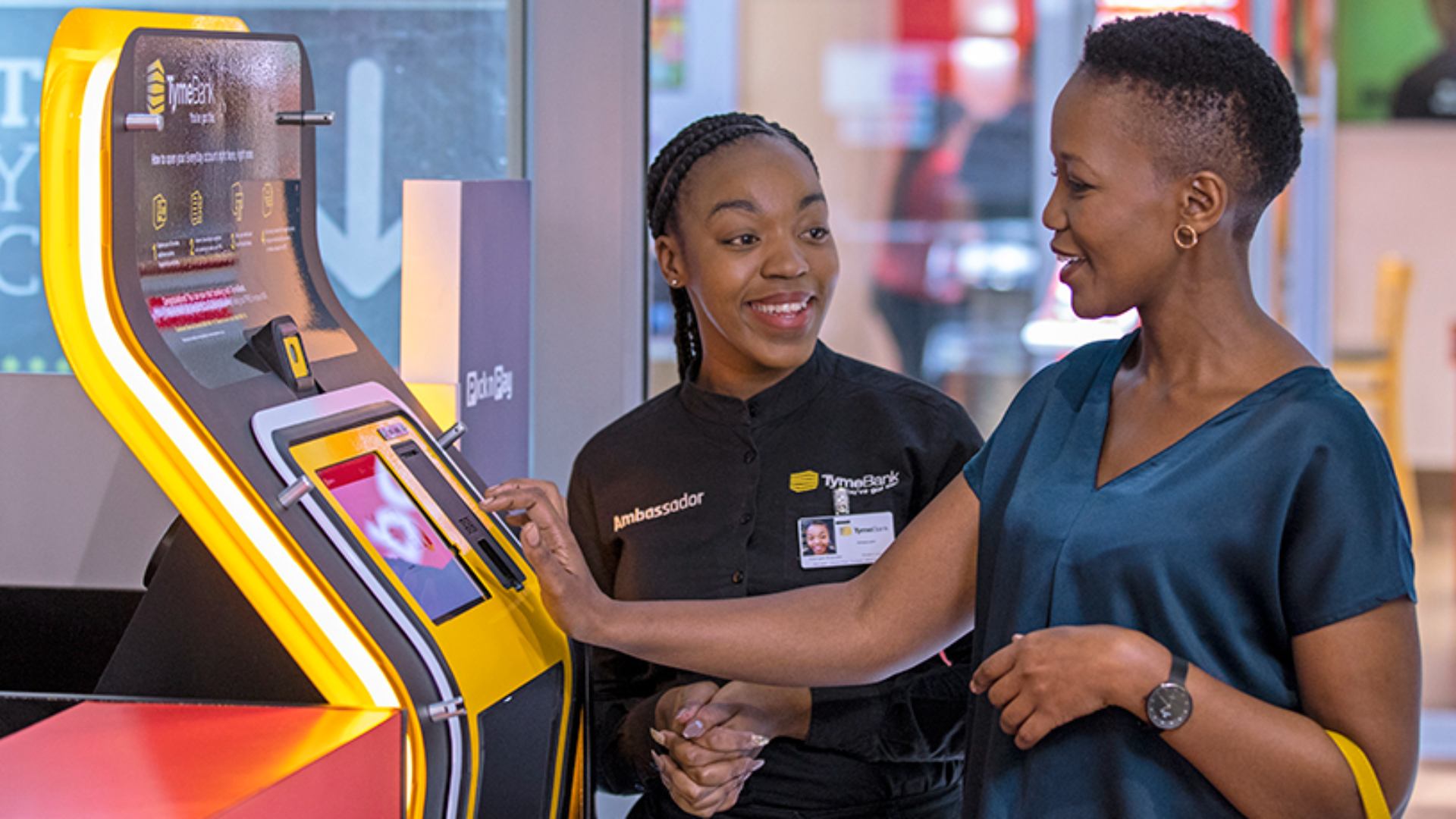
Launched in 2019, TymeBank was South Africa’s first neobank. It rapidly transformed the South African banking landscape with its low-cost banking model to service customers that might otherwise be excluded from traditional banking. With account openings facilitated through kiosks in retailers like Pick n Pay, TymeBank has stood out in its financial inclusion efforts. TymeBank surpassed 10.7 million customers last year and gained approximately R7 billion in deposits as of December 2024. Tyme Bank offers zero-fee accounts, competitive interest rates, and SME financing. By the end of 2024, Tyme Bank achieved unicorn status with a USD1.5 billion valuation.
Discovery Bank
Discovery Bank was launched in 2018 by the healthcare and insurance giant Discovery Ltd. It offers dynamic interest rates and incentives based on customer behaviour, using the successful “Vitality” model used in Discovery’s medical insurance. It targets a more affluent customer base, positioning itself as a premium digital-first option for the health- and wealth-conscious. In less than five years, the bank acquired 1 million clients, achieving this remarkable milestone two years ahead of schedule. Its comprehensive digital platform includes features such as a revolving credit facility, home loans with competitive interest rates, and seamless integration with the broader Discovery Group ecosystem.
Bank Zero
Another notable player is Bank Zero, a digital-only mutual bank which was co-founded by former First National Bank CEO Michael Jordaan and a group of previous employees in 2018. The idea? A modern App-driven bank which aligned with individuals and businesses in order to reduce the cost of banking in SA. With a focus on transparency, zero monthly fees, and open APIs, Bank Zero caters to tech-savvy individuals and SMEs. Last month Lesaka Technologies invested into Bank Zero by obtaining its licence and digital banking infrastructure for USD61 million. This move sees Bank Zero combining its infrastructure and licence with Lesaka’s distribution platform and fintech capability.
At the individual customer level, South Africa’s population is young, mobile-first, and increasingly comfortable with digital tools. According to Stats SA, South Africa’s youth, comprising young people between the ages of 15 and 34 years, makes up one-third of the population. There’s strong demand for flexible, low-cost financial products, especially those that can adapt to informal income streams or help users navigate economic uncertainty. Digital users are also demanding real value in the form of lower fees, higher interest on savings, and tools that help them manage debt and plan.
On the business side, the growing need for better small and medium-sized enterprise (SME) banking is prevalent. The SME sector contributes significantly to job creation and economic growth but often struggles with access to credit, cash flow tools, and tailored financial services. If Old Mutual’s banking can seek to address this segment effectively, something traditional banks have historically not done well, it could also carve out a strong niche.
The proliferation of new banking options can be of great benefit to the South African economy, if executed well. More competition typically leads to better service, lower fees, and innovation. For consumers, this could mean greater access to credit, better savings rates, and tools that help build financial resilience. For small businesses, it might mean faster loan approvals, integrated accounting services, and access to previously hard-to-get working capital.
But the impact goes deeper. Financial inclusion has a direct link to economic development. A more inclusive banking system can help reduce poverty, boost entrepreneurship, and increase household savings. According to the World Bank, financial inclusion is a stimulus for realising seven of the 17 Sustainable Developmental Goals (SDGs). These outcomes are particularly crucial in a country grappling with unacceptably high unemployment and widening inequality gap. As such, the entry of Old Mutual bank in the South African banking industry adds weight to this dynamic. As a trusted brand with deep distribution networks, particularly in underserved communities, it is uniquely positioned to drive real inclusion, not just digital sign-ups.
With Old Mutual Bank launched and preparing to scale, several key questions will shape and determine its direction and impact.
Old Mutual Bank's entry isn't only about it being just another player. Its arrival also symbolises the maturation of South Africa’s digital banking era. As legacy insurers, tech upstarts, and traditional banks converge on the same playing field, the lines between finance, technology, and customer experience are blurring.
For South Africans, including individuals navigating uncertain economic times or small businesses seeking growth, the abundance of options could not come at a better time. A new era in the South African banking is emerging. An era in which trust, technology, and tailored solutions must coexist. And in this fast-evolving landscape, only those who deliver real value will thrive.
by Luvuyo Mncanca